An important part of our sourcing process is travel and first-hand experience from the vineyard.
For that reason and since none of our team had travelled to South America for a few years, it was important to check in, see what’s happening on the ground and explore new things.
Since my last visit there’s been great evolution in identification of micro-climates, soils and sub-zones among the alluvial fans of Rivers Las Tunas and the Tunuyán.
The Andes mountains dominating the western skyline are all important for supply of mineral rich alluvial deposits and water.
Several GI’s (Geographical Indications) are emerging in the valley with front runners including Gualtallary in Tupungato and GI Paraje Altamira in San Carlos.
Domaine Bousquet, Gualtallary 1,200m above sea level. Pioneers to this sub-region in the late 1990’s and now the leading organic exporter from Argentina.
Their biodynamic, organic, regenerative organic and B-Corp certifications work together in a transparent and holistic approach of continuous improvement with parallels to life and personal development.
Their approach means there’s life in the vineyard, the soils are very much alive which ultimately transpires to the wines.



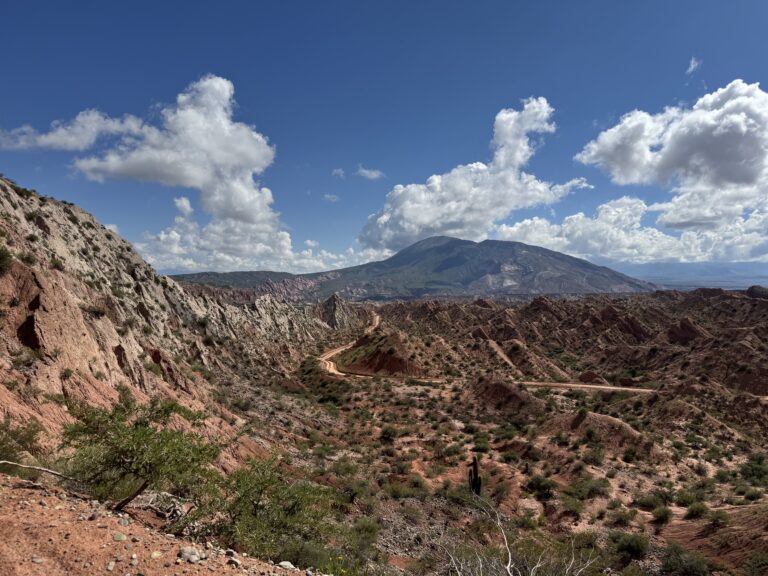
Travelling west from Salta we drove 4.5 hours over mostly dirt track up over 3,800m, into the Calchaqui Valley and through Los Cardones National Park. The drive is outstanding, exposed rock and rust coloured soil against patchy blue sky, always changing.
Estancia Colomé at 2,300m one of the oldest working wineries in Argentina. Located in the Upper Calchaqui Valley growing vines amid acacia trees, many ‘Cardones’ (cactus), local herbs and shrubs.
They’re growing vines up and down the valley, the furthest extreme being to the north, up over 3,000m on pink granite, volcanic soils. Thibaut the wine maker produces outstanding pinot noir, sauvignon blanc and malbec at record altitude levels.
If you are looking for true escapism and space for your mind and body to relax I would highly recommend a few nights in one of the 9 lovely rooms at Estancia Colomé.

Enclosed by the Andes and the much older coastal mountain ranges the Central Valley begins a little South of Santiago. Within it we find sub-regions created by truncated hill ranges and river valleys flowing west from the Andes.
With four clear seasons, lots of ripening sunshine and consistent cool breezes from the Humbolt cooled Pacific Ocean, this valley is perfect for growing excellent fruit, including of course, grapes.

First stop is to the Caperana Estate of TerraMater in the Maipo Valley at the top of the Central Valley. Caperana is the town in Italy José Canepa emigrated from in 1914 as a pioneering agricultural settler.
Having grown grapes here for many decades it was only in 1996 they decided to build a winery on site and add value to their top-class farm produce. Now in the hands of Alfredo, the third generation of the Canepa family. Paula the winemaker (previously awarded top wine maker in Chile) ensures the high-quality fruit transpires into the wine.
If I were to dream up a vineyard and low impact winery that all work together with nature and fit with the natural landscape the Los Robles Estate of Emiliana would be it.
Tucked into some hills on the edge of the Colchagua Valley, adjacent to 650 hectares (ha) of native bush and woodland, the 100ha they have under vine is shaped by the streams and veins of native bush which run through it towards the valley floor.
Jose, the founder, discovered biodynamic farming while travelling Europe in 1998. Following that he set about work on his vision which is in full flow today. They are global leaders in organic and biodynamic farming. Everything from the winery design through to the people works together and gives back to an holistic ecosystem.
As well as the wines which represent the Estate here including 57Rocas, Coyam and Gé we tasted the new range from Limari Valley, many miles north of Santiago – Maycas – Chardonnay and Pinot noir benefitting from the calcium carbonate in the soil and fresh nighttime conditions.


I’ve tasted some lovely wines from Leyda and Lo Abarca Valleys, both to the seaward side of the coastal ranges to the north of Central Valley. Growing here is so close to the sea that pinot noir and cool climate grapes really display, freshness, elegance and class. I tasted some classy wines from the Atacama dessert too.
These more extreme regions including the south are really interesting and with a new level of freshness bolster Chiles ability to make excellent wines.
