Producer >
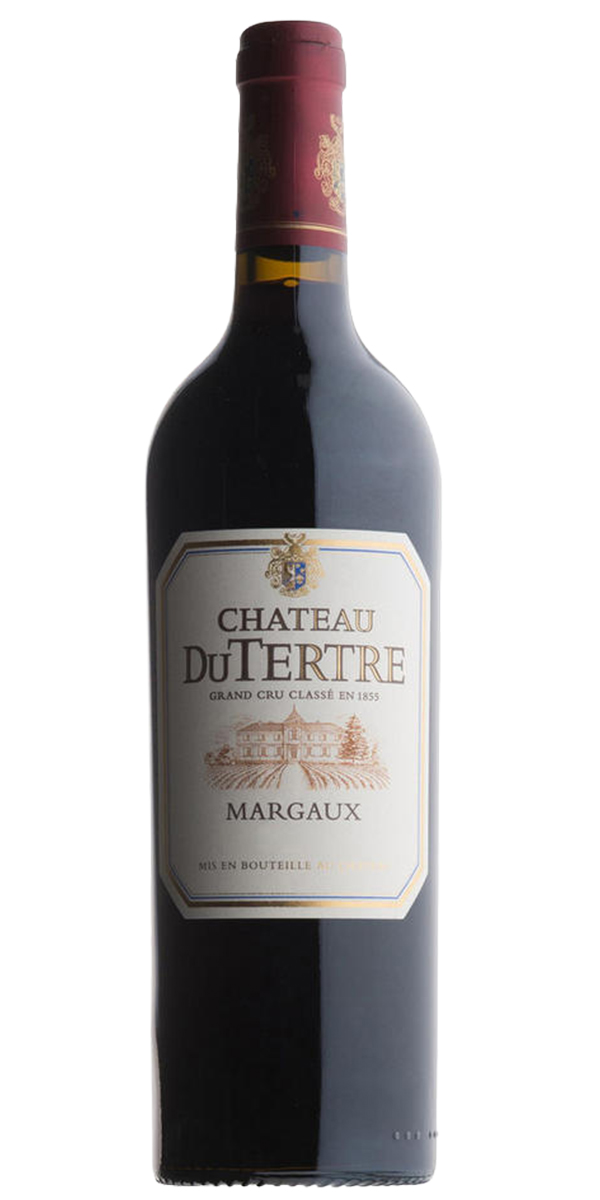
Château du Tertre is a historic Fifth Growth (Grand Cru Classé) estate in the Margaux appellation, renowned for its elevated terroir, classical styling, and enduring reputation within Bordeaux’s Left Bank hierarchy.
With origins stretching back to the 12th century, Château du Tertre is among the oldest estates in the Médoc, its legacy intertwined with influential families and notable figures such as glassmaker Pierre Mitchell.
The estate achieved international recognition in 1855, when it was classified as a Fifth Growth, cementing its place among Margaux’s elite producers.
In modern times, significant investment—particularly under Eric Albada Jelgersma—has revitalised the château, restoring both quality and prestige while balancing tradition with contemporary precision.
Viticulture >
Situated on one of the Médoc’s highest gravelly hilltops, at an altitude of around 24 meters, the 80-hectare estate includes 52 hectares of AOC Margaux vineyards in a single block, as well as 6 hectares dedicated to white wine production.
On a terroir of fine, deep gravel, clay and sand, Cabernet Sauvignon, Merlot, Cabernet Franc and Petit Verdot express themselves to give life to wines of subtle, delicate elegance, just like our Château du Tertre.
Further down the slope, on naturally cooler sandy-gravel soils, grape varieties dedicated to the production of a discreetly charming wine flourish: Tertre Blanc.
Winemaking >
In the cellar, each new vintage is a new show, the first act of which begins with fermentation. The hand-picked grapes are rigorously selected using an optical sorting machine. After sorting and crushing, they flow by gravity into concrete, wood and stainless steel vats, where they are collected and the fermentation process begins.
The vats, adapted to each plot, begin the second act: the transformation of the fruit. Gentle extractions are always adapted, for a vatting time that varies from year to year. The atmosphere is exhilarating and hectic. As fermentation progresses, decisions are adjusted and refined. The aim is to express as closely as possible what nature has given us, and what time will sublimate.
The vats, adapted to each plot, begin the second act: the transformation of the fruit. Gentle extractions are always adapted, for a vatting time that varies from year to year. The atmosphere is exhilarating and hectic. As fermentation progresses, decisions are adjusted and refined. The aim is to express as closely as possible what nature has given us, and what time will sublimate.

 Cabernet Sauvignon (75%), Merlot (10%), Cabernet Franc (10%), Petit Verdot (5%)
 Red
Red 13%
13% France
 6
6 Cork
Cork Yes
Yes Château du Tertre
 Ready - youthful (2022 - 2044)
 Yes
Yes 75cl
75cl Vegan
Vegan Vegetarian
  Fact Sheet