Producer >
Taking over his parents' estate in 1984, Markus Molitor has built one of the Mosel's most important domaines, expanding the family holding to 125ha across 18 of the region's finest steep-slope vineyards. His work is rooted along the banks of the Mosel, where site selection and long-term vision have defined the estate's identity.
Viticulture >
The Molitor vineyards are spread out over locations from Brauneberg to Traben-Trarbach and, since 2001, also along the River Saar. The wide regional spread and the associated diversity of the slate soils and microclimates of the vineyards allow the estate to express the varied styles that the Mosel can produce. The winery is based at the centre of the Wehlener Klosterberg site and cultivates vineyards in 15 different sites. The steepest slopes here have a slope of up to 80 % and therefore have to be cultivated by hand. Farming at the estate is organic. Training of the vines is done on tall posts, with the canopy being attached to the posts as it grows during the season. These high walls of leaves ensure the ideal supply of nutrients for fewer grapes per vine and promote the optimum in terms of extract yield and physiological maturity. Depending on the site, plot, density of the plants and the vintage, the harvest volume is 10 - 55 hl/ha. The soils are slate wihich not only has excellent heat storage properties but is also marked by a very specific, localized mineral composition. Blueschist, grey shale and Rotliegend are the best known types of slate, while there are also numerous interim forms. The Haus Klosterberg is at the heart of the estate and stretches up the steep slopes around the winery buildings. It is located in a side valley directly opposite Zeltingen, and faces almost due south and is planted with Riesling and Pinot Blanc. Light to medium-heavy stony soils of decomposed slate with a high proportion of iron to produce mineral-flavoured and long-lived wines with delicate, elegant fruit. Harvesting is done by hand.
Winemaking >
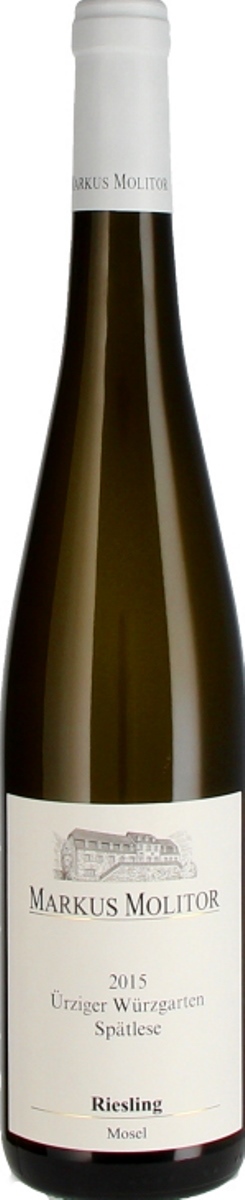
The grapes were strictly hand-picked in October. 100% healthy grapes were gently crushed and macerated for several hours on the berry skins rich in aromas and minerals. The must was then spontaneously fermented slowly and cool, allowing the wine`s multi-faceted, fruity aromas to fully develop. A gentle aging with long storage on the yeast followed the fermentation.


 Riesling
 7.5
 GERMANY
 6
 Cork
 Weingut Markus Molitor
 Vegan
 Vegetarian
 Fact Sheet