VI_Product Object
(
=> stdClass Object
(
[Image1_URL] => AI1122RC.JPG
[Image2_URL] =>
[Image3_URL] =>
[Image1Type] => Jpeg
[Code] => AI1122RC
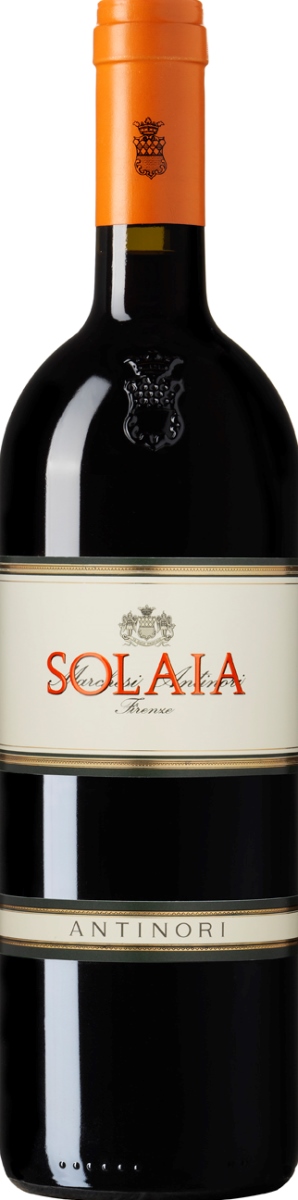
[SecondaryDescription] => Solaia, Toscana IGT, Tenuta Tignanello, Marchesi Antinori
[Description] => Tenuta Tignanello Solaia
[Vintage] => 2022
[UnitSize] => 75
[CaseSize] => 3
[VATType] => 0
[VATRateNo] => 1
[VATPercent] => 23
[BinNo] =>
[IsInCustomerList] =>
[Notes1] => A very intense ruby red in color, the wine offers aromas rich in their concentration of red and black
fruit (cherries and black cherries, raspberries, cassis, blueberries, and wild berry fruit) which,
together with notes of vanilla, black pepper, and liquorice, compose a bouquet which is decisively
ample and complex. The palate is exceptionally elegant and balanced, fresh in its flavors and with
much personality, solid and silky in its texture and tannins. The finish, characterized by notes of
fruit and spices, is of great finesse and persistence.
[Notes2] =>
[Notes3] => Solaia is a 50 acre (20 hectare) vineyard with a southwestern exposure situated at some 1325 feet
(400 meters) above sea level
[Notes4] => The winter of 2014 was a rather mild season with
temperatures slightly higher than normal averages for the
period. This led to an early bud burst of all the grape
varieties - Sangiovese, Cabernet Sauvignon, and Cabernet
Franc. The spring season was marked by dry and mild
weather which assisted a good flowering and bud set of
the crop.
The summer, somewhat unstable and with more frequent
rainfall than usual, slowed the processes of color change
and ripening in the grapes, which re-balanced themselves
in part during the first weeks of September thanks to days
of warm and sunny weather. The harvest took place
between the second half of September and early
October. The Cabernet Franc between the 22nd and the
30th of September, the Sangiovese between the 3rd and
the 7th of October, the Cabernet Sauvignon between the
9th and the 12th of October.
[MediaNotes] =>
[ServingSuggestion] =>
[WineMakingNotes] => The vintage 2014 has had the most important aspects in the management of the vineyard and in
the selection of the grapes to achieve Solaia`s quality. Pruning interventions in the vineyard
combined with careful manual harvesting have ensured great potential of the grapes and grand
varietal character.
Once in the cellars, the grapes are delicately destemmed and the berries, before pressing, were
carefully selected on a sorting table; here attention to detail was at its maximum, it is of
fundamental importance that only perfect grapes end up in the 60 hectoliter (1585 gallon) conical
fermenting tanks. During the fermentation and the period of skin contact, the must slowly became
wine. in this phase much care was needed to maintain freshness and aroma, but without neglecting
the extraction of color and a management of the tannins aimed at elegance and suppleness. Once
the wine was run off its skins, it went through a complete malolactic fermentation in oak barrels to
further add finesse and drinking pl
[CreationDate] => 2025-09-04T09:24:48.327
[StockTotalBottles] => 57
[StockCases] => 19
[StockBottles] => 0
[StockOnOrderTotalBottles] => 0
[StockOnOrderCases] => 0
[StockOnOrderBottles] => 0
[StockOnOrderAvailableTotalBottles] => 0
[StockOnOrderAvailableCases] => 0
[StockOnOrderAvailableBottles] => 0
[StockOnOrderMaxDeliveryDate] => 0001-01-01T00:00:00
[BasketBottles] => 0
[BasketCases] => 0
[BsktLnNo] => 0
[GroupCode] => B07
[GroupName] => Tuscany
[SubGroupCode] => B0703
[SuperGroupCode] => 12
[SpecialPriceOverride] => 0
[UnitDescription] => Centilitre
[ReportTag] => Fine Wines
[ReportTagCode] => B
[WebProductCategory] => Drinks
[WebProductCategoryCode] => 001
[ExciseCode] => 3101
[ExciseDescription] => IMP. STILL WINE N/E 15% VOL
[Rating] => -1
[MinimumOrderQuantity] => 0
[MaximumOrderQuantity] => 99999999
[AlcoholicPercentage] => 14
[AlsoAvailableIn] =>
[Appellation] => Toscana IGT
[ResidualSugar] => 0.6
[TitratableAcidity] => 5.2
[Type] => Red
[TypeCode] => 10
[Style] => Rich & full bodied
[StyleCode] => 004
[OakedStyle] => Not Set
[OakedStyleCode] => 0
[ExpectedVintageChange] => Not Set
[FoodSuggestion1] => Red meat
[FoodSuggestion2] => Cheese
[FoodSuggestion3] => Not Set
[FoodSuggestion4] => Not Set
[FoodSuggestion5] => Not Set
[FoodSuggestion1Code] => 010
[FoodSuggestion2Code] => 050
[FoodSuggestion3Code] => 0
[FoodSuggestion4Code] => 0
[FoodSuggestion5Code] => 0
[OrganicBiodynamic] => Not Set
[OrganicBiodynamicCode] => 000
[ClosureStyle] => Cork
[ClosureStyleCode] => 10
[WebDisplayRank] => 6
[CustomListItem1] => Not Set
[CustomListItem1Code] => 000
[CustomListItem2] => Not Set
[CustomListItem2Code] => 000
[CustomListItem3] => Not Set
[CustomListItem3Code] => 000
[NextVintage] => 3.65
[ConditionMarker] => Default Condition
[CountryCode] => IT
[CountryDescription] => ITALY
[WebCode] => A
[OnlySellMultiplesOf] => 0
[MinimumStockLevel1] => 0
[MinimumStockLevel2] => 0
[AlternativeStockCode] => 0
[PriceListType] => L
[GroupPromotionCode] =>
[GrossCaseWeight] => 10
[SpareItem1] =>
[SpareItem2] =>
[SpareItem3] =>
[SpareItem4] =>
[SpareItem5] =>
[IsNewWebProduct] => 1
[CustomDateTime1] => 1998-01-01T09:00:00
[CustomDate1] => 1998-01-01T00:00:00
[CustomTime1] => 09:00
[CustCase] => 970
[CustBott] => 323.33
[CasePrice] => 970
[CaseNett] => 970
[CaseVAT] => 223.1
[CaseList] => 970
[BottleNett] => 283.33
[BottleVAT] => 65.1659
[CasePrice_OptionalPriceBand] => 970
[BottlePrice_OptionalPriceBand] => 283.33
[Retail_CasePrice_Band1] => 0
[Retail_BottlePrice_Band1] => 0
[Retail_CasePrice_Band2] => 0
[Retail_BottlePrice_Band2] => 0
[Retail_CasePrice_Band3] => 0
[Retail_BottlePrice_Band3] => 0
[Retail_CasePrice_Band4] => 0
[Retail_BottlePrice_Band4] => 0
[Retail_CasePrice_Band5] => 0
[Retail_BottlePrice_Band5] => 0
[Retail_CasePrice_Band6] => 0
[Retail_BottlePrice_Band6] => 0
[Retail_CasePrice_Band7] => 0
[Retail_BottlePrice_Band7] => 0
[Retail_CasePrice_Band8] => 0
[Retail_BottlePrice_Band8] => 0
[Retail_CasePrice_Band9] => 0
[Retail_BottlePrice_Band9] => 0
[Retail_CasePrice_Band10] => 0
[Retail_BottlePrice_Band10] => 0
[Trade_CasePrice_Band1] => 970
[Trade_BottlePrice_Band1] => 283.33
[Trade_CasePrice_Band2] => 0
[Trade_BottlePrice_Band2] => 0
[Trade_CasePrice_Band3] => 970
[Trade_BottlePrice_Band3] => 283.33
[Trade_CasePrice_Band4] => 0
[Trade_BottlePrice_Band4] => 0
[Trade_CasePrice_Band5] => 0
[Trade_BottlePrice_Band5] => 0
[Trade_CasePrice_Band6] => 0
[Trade_BottlePrice_Band6] => 0
[Trade_CasePrice_Band7] => 0
[Trade_BottlePrice_Band7] => 0
[Trade_CasePrice_Band8] => 0
[Trade_BottlePrice_Band8] => 0
[Trade_CasePrice_Band9] => 0
[Trade_BottlePrice_Band9] => 0
[Trade_CasePrice_Band10] => 0
[Trade_BottlePrice_Band10] => 0
[Grapes] => stdClass Object
(
[Grape] => Array
(
[0] => stdClass Object
(
[GrapeCode] => G032
[GrapeName] => Cabernet Franc
[GrapeCharacteristics] => Cabernet Franc is widely planted in Bordeaux and is the most important black grape grown in the Loire.It is more widely used in St.Emilion and Cheval Blanc is the most famous Cabernet Franc wine in the world.
[GrapePercent] => 30
)
[1] => stdClass Object
(
[GrapeCode] => G037
[GrapeName] => Cabernet Sauvignon
[GrapeCharacteristics] => It is adaptable to a wide range of soils, although it performs particularly well on well-drained, low-fertile soils. It has small, dusty, black-blue berries with thick skins that produce deeply coloured, full-bodied wines with notable tannins
[GrapePercent] => 30
)
[2] => stdClass Object
(
[GrapeCode] => G247
[GrapeName] => Sangiovese
[GrapeCharacteristics] => It produces wines with pronounced tannins and acidity, though not always with great depth of colour, and its character can vary from farmyard/leather nuances through to essence of red cherries and plums.
[GrapePercent] => 30
)
)
)
[GrowerCode] => AI1
[WinemakerCode] => AI1
[OwnerCode] => AI1
[ProducerCode] => AI1
[Grower] => stdClass Object
(
[Code] => AI1
[Name] => Tenuta Tignanello
[Address1] => Marchesi Antinori Srl
[Address2] => 3 Piazza Antinori
[Address3] => Firenze
[Address4] =>
[Address5] => 50123
[Country] => ITALY
[Phone] => 003905523595
[Fax] => 00390552359884
[Email] => antinori@antinori.it
[Website] => http.//www.antinori.it/en/26-generazioni/tignanello
[Notes1] => An iconic estate, producing Sangiovese based wines blended with Cabernet Sauvignon. A leading ‘supertuscan’. Lying in the heart of Chianti on 319 hectares of land, the estate has two prized vineyards; Tignanello and Solaia. The soils of these vineyards orginate from
marine marlstone, rich in limestone and schist. The vineyards are
instantly recognisable with the white stones reflecting the sunshine back onto the vines.
[Notes2] => The historian Carocci, in his historical-artistic guide to the town of San Casciano Val di Pesa, written in 1829, described Tignanello, a farm with an extensive vineyard, as one of the highest and most picturesque points of the entire township territory. On the top of the hill, thanks to its panoramic position and the fertility of the vegetation, could be found a small group of houses, some of which were very old indeed.
[Notes3] => The vineyards are divided into small parcels which include two jewels. the 57 hectares (some 140 acres) of the Tignanello vineyard and the contiguous 20 hectares (50 acres) of the Solaia vineyard. The soil of the property, which dates from the Pliocene epoch, generally with little fertility and limited supplies of ground water and with sub-soils rich in limestone and calcareous clay rock, constitutes something special and unique. Together with the particular position of the vineyards, planted at an altitude between 350 and 400 meters (1148-1312 feet) in altitude, it contributes to obtaining wines of decisive character and a distinct elegance. the grapes enjoy warm days and cool nights during
the growing season.
The grape varieties which have been planted at Tignanello include the native Sangiovese and the non-traditional Cabernet Sauvignon and Cabernet Franc. There are small quantities of white grapes, Malvasia and Trebbiano, utilized for the production of Vin Santo. Other non-traditional grapes at Tignanello include a few rows of Syrah and Merlot, planted for experimental purposes during the 1970’s.
The property also includes 37 hectares (over 90 acres) of olive groves which produce a small quantity of olive oil.
[Notes4] => Ever since the 1979’s the Tenuta Tignanello estate has been, in a certain sense, the “laboratory” for the experimental work of the Antinori firm. Cabernet Sauvignon and Cabernet Franc were first experimented with by Antinori in the 1920’s, then abandoned during the Second World War , replanted in the 1960’s, and first used commercially in the 1970’s. In viticulture, research is based on work to obtain grapes with greater concentration and suppler tannins, intervening on vineyard spacing (better if tighter) or pruning practices and the selection of Sangiovese clones. In the field of oenology, the guidelines are oriented towards obtaining wines with a well defined personality by means of fermentation in oak, soft pressing and soft, non-traumatic movement of the fermenting grapes along with a malolactic fermentation in oak barrels.
All the new viticultural practices now becoming standard working methods move in the same direction and are the result of 30 years of experience with the Sangiovese grape. In this part of Tuscany, a special area in terms of altitude, exposition, micro-climate, and soil, Sangiovese becomes expressive by bringing out all of its character and personality, but there is also some risk of a less than perfect ripening which can lead to tannins which can be slightly “nervous”.
To reduce these limits to the expressiveness of Sangiovese, we are using the limestone – “albarese” – rocks present in the soil. These white stones were first pulverized and then placed below the vine rows to create a series of advantages. greater solar radiation caused by the reflection of sunlight from the stones, fewer problems of weed infestation, grapes which are closer to the warmth of the ground. The grapes produce a wine with softer and rounder tannins, but which maintain the typical structure and complexity of Sangiovese.
[Notes5] => Made to measure attention and care guide the cellar work as well. Tignanello and Solaia, in fact, have cellars for the fermentation and aging of the wines dedicated solely to them. The fermenting cellars, completely renovated in 2008, are located in an old building close to the estate’s villa, and the aging – or barrel – cellars are, effectively, the cellar of the villa.
The fermenting cellars were planned with the aim of the maximum attention to detail and to the achievement of significant subtleties in the wines. This is possible thanks to equipment, tools, modern material, but certainly to human sensibility as well.
An area for receiving the crop was created solely for the Solaia grapes. after destemming, a manual selection on a conveyor belt, “berry by berry”, is carried out. The berries
then go into the fermenting tanks, on top of which there is pressing equipment which allows the crushed gapes to go directly into their fermenters.
Small (60 hectoliter), conical oak fermenters were selected in order to carry out the punching down of the cap of skins without excessive force or impact, a working method, therefore, which is particularly delicate. After the fermentation, the wine goes directly into the underground aging cellars, moving solely by the force of gravity.
The aging cellars in which the Solaia barrels are situated, one with a classic arched stone ceiling, is part of the original structure of the villa, while the Tignanello aging cellars are a later enlargement, realized and created expressly for the aging of the wine in barrel.
[Image1_URL] =>
[Image2_URL] =>
[Image3_URL] =>
)
[Winemaker] => stdClass Object
(
[Code] => AI1
[Name] => Tenuta Tignanello
[Address1] => Marchesi Antinori Srl
[Address2] => 3 Piazza Antinori
[Address3] => Firenze
[Address4] =>
[Address5] => 50123
[Country] => ITALY
[Phone] => 003905523595
[Fax] => 00390552359884
[Email] => antinori@antinori.it
[Website] => http.//www.antinori.it/en/26-generazioni/tignanello
[Notes1] => An iconic estate, producing Sangiovese based wines blended with Cabernet Sauvignon. A leading ‘supertuscan’. Lying in the heart of Chianti on 319 hectares of land, the estate has two prized vineyards; Tignanello and Solaia. The soils of these vineyards orginate from
marine marlstone, rich in limestone and schist. The vineyards are
instantly recognisable with the white stones reflecting the sunshine back onto the vines.
[Notes2] => The historian Carocci, in his historical-artistic guide to the town of San Casciano Val di Pesa, written in 1829, described Tignanello, a farm with an extensive vineyard, as one of the highest and most picturesque points of the entire township territory. On the top of the hill, thanks to its panoramic position and the fertility of the vegetation, could be found a small group of houses, some of which were very old indeed.
[Notes3] => The vineyards are divided into small parcels which include two jewels. the 57 hectares (some 140 acres) of the Tignanello vineyard and the contiguous 20 hectares (50 acres) of the Solaia vineyard. The soil of the property, which dates from the Pliocene epoch, generally with little fertility and limited supplies of ground water and with sub-soils rich in limestone and calcareous clay rock, constitutes something special and unique. Together with the particular position of the vineyards, planted at an altitude between 350 and 400 meters (1148-1312 feet) in altitude, it contributes to obtaining wines of decisive character and a distinct elegance. the grapes enjoy warm days and cool nights during
the growing season.
The grape varieties which have been planted at Tignanello include the native Sangiovese and the non-traditional Cabernet Sauvignon and Cabernet Franc. There are small quantities of white grapes, Malvasia and Trebbiano, utilized for the production of Vin Santo. Other non-traditional grapes at Tignanello include a few rows of Syrah and Merlot, planted for experimental purposes during the 1970’s.
The property also includes 37 hectares (over 90 acres) of olive groves which produce a small quantity of olive oil.
[Notes4] => Ever since the 1979’s the Tenuta Tignanello estate has been, in a certain sense, the “laboratory” for the experimental work of the Antinori firm. Cabernet Sauvignon and Cabernet Franc were first experimented with by Antinori in the 1920’s, then abandoned during the Second World War , replanted in the 1960’s, and first used commercially in the 1970’s. In viticulture, research is based on work to obtain grapes with greater concentration and suppler tannins, intervening on vineyard spacing (better if tighter) or pruning practices and the selection of Sangiovese clones. In the field of oenology, the guidelines are oriented towards obtaining wines with a well defined personality by means of fermentation in oak, soft pressing and soft, non-traumatic movement of the fermenting grapes along with a malolactic fermentation in oak barrels.
All the new viticultural practices now becoming standard working methods move in the same direction and are the result of 30 years of experience with the Sangiovese grape. In this part of Tuscany, a special area in terms of altitude, exposition, micro-climate, and soil, Sangiovese becomes expressive by bringing out all of its character and personality, but there is also some risk of a less than perfect ripening which can lead to tannins which can be slightly “nervous”.
To reduce these limits to the expressiveness of Sangiovese, we are using the limestone – “albarese” – rocks present in the soil. These white stones were first pulverized and then placed below the vine rows to create a series of advantages. greater solar radiation caused by the reflection of sunlight from the stones, fewer problems of weed infestation, grapes which are closer to the warmth of the ground. The grapes produce a wine with softer and rounder tannins, but which maintain the typical structure and complexity of Sangiovese.
[Notes5] => Made to measure attention and care guide the cellar work as well. Tignanello and Solaia, in fact, have cellars for the fermentation and aging of the wines dedicated solely to them. The fermenting cellars, completely renovated in 2008, are located in an old building close to the estate’s villa, and the aging – or barrel – cellars are, effectively, the cellar of the villa.
The fermenting cellars were planned with the aim of the maximum attention to detail and to the achievement of significant subtleties in the wines. This is possible thanks to equipment, tools, modern material, but certainly to human sensibility as well.
An area for receiving the crop was created solely for the Solaia grapes. after destemming, a manual selection on a conveyor belt, “berry by berry”, is carried out. The berries
then go into the fermenting tanks, on top of which there is pressing equipment which allows the crushed gapes to go directly into their fermenters.
Small (60 hectoliter), conical oak fermenters were selected in order to carry out the punching down of the cap of skins without excessive force or impact, a working method, therefore, which is particularly delicate. After the fermentation, the wine goes directly into the underground aging cellars, moving solely by the force of gravity.
The aging cellars in which the Solaia barrels are situated, one with a classic arched stone ceiling, is part of the original structure of the villa, while the Tignanello aging cellars are a later enlargement, realized and created expressly for the aging of the wine in barrel.
[Image1_URL] =>
[Image2_URL] =>
[Image3_URL] =>
)
[Owner] => stdClass Object
(
[Code] => AI1
[Name] => Tenuta Tignanello
[Address1] => Marchesi Antinori Srl
[Address2] => 3 Piazza Antinori
[Address3] => Firenze
[Address4] =>
[Address5] => 50123
[Country] => ITALY
[Phone] => 003905523595
[Fax] => 00390552359884
[Email] => antinori@antinori.it
[Website] => http.//www.antinori.it/en/26-generazioni/tignanello
[Notes1] => An iconic estate, producing Sangiovese based wines blended with Cabernet Sauvignon. A leading ‘supertuscan’. Lying in the heart of Chianti on 319 hectares of land, the estate has two prized vineyards; Tignanello and Solaia. The soils of these vineyards orginate from
marine marlstone, rich in limestone and schist. The vineyards are
instantly recognisable with the white stones reflecting the sunshine back onto the vines.
[Notes2] => The historian Carocci, in his historical-artistic guide to the town of San Casciano Val di Pesa, written in 1829, described Tignanello, a farm with an extensive vineyard, as one of the highest and most picturesque points of the entire township territory. On the top of the hill, thanks to its panoramic position and the fertility of the vegetation, could be found a small group of houses, some of which were very old indeed.
[Notes3] => The vineyards are divided into small parcels which include two jewels. the 57 hectares (some 140 acres) of the Tignanello vineyard and the contiguous 20 hectares (50 acres) of the Solaia vineyard. The soil of the property, which dates from the Pliocene epoch, generally with little fertility and limited supplies of ground water and with sub-soils rich in limestone and calcareous clay rock, constitutes something special and unique. Together with the particular position of the vineyards, planted at an altitude between 350 and 400 meters (1148-1312 feet) in altitude, it contributes to obtaining wines of decisive character and a distinct elegance. the grapes enjoy warm days and cool nights during
the growing season.
The grape varieties which have been planted at Tignanello include the native Sangiovese and the non-traditional Cabernet Sauvignon and Cabernet Franc. There are small quantities of white grapes, Malvasia and Trebbiano, utilized for the production of Vin Santo. Other non-traditional grapes at Tignanello include a few rows of Syrah and Merlot, planted for experimental purposes during the 1970’s.
The property also includes 37 hectares (over 90 acres) of olive groves which produce a small quantity of olive oil.
[Notes4] => Ever since the 1979’s the Tenuta Tignanello estate has been, in a certain sense, the “laboratory” for the experimental work of the Antinori firm. Cabernet Sauvignon and Cabernet Franc were first experimented with by Antinori in the 1920’s, then abandoned during the Second World War , replanted in the 1960’s, and first used commercially in the 1970’s. In viticulture, research is based on work to obtain grapes with greater concentration and suppler tannins, intervening on vineyard spacing (better if tighter) or pruning practices and the selection of Sangiovese clones. In the field of oenology, the guidelines are oriented towards obtaining wines with a well defined personality by means of fermentation in oak, soft pressing and soft, non-traumatic movement of the fermenting grapes along with a malolactic fermentation in oak barrels.
All the new viticultural practices now becoming standard working methods move in the same direction and are the result of 30 years of experience with the Sangiovese grape. In this part of Tuscany, a special area in terms of altitude, exposition, micro-climate, and soil, Sangiovese becomes expressive by bringing out all of its character and personality, but there is also some risk of a less than perfect ripening which can lead to tannins which can be slightly “nervous”.
To reduce these limits to the expressiveness of Sangiovese, we are using the limestone – “albarese” – rocks present in the soil. These white stones were first pulverized and then placed below the vine rows to create a series of advantages. greater solar radiation caused by the reflection of sunlight from the stones, fewer problems of weed infestation, grapes which are closer to the warmth of the ground. The grapes produce a wine with softer and rounder tannins, but which maintain the typical structure and complexity of Sangiovese.
[Notes5] => Made to measure attention and care guide the cellar work as well. Tignanello and Solaia, in fact, have cellars for the fermentation and aging of the wines dedicated solely to them. The fermenting cellars, completely renovated in 2008, are located in an old building close to the estate’s villa, and the aging – or barrel – cellars are, effectively, the cellar of the villa.
The fermenting cellars were planned with the aim of the maximum attention to detail and to the achievement of significant subtleties in the wines. This is possible thanks to equipment, tools, modern material, but certainly to human sensibility as well.
An area for receiving the crop was created solely for the Solaia grapes. after destemming, a manual selection on a conveyor belt, “berry by berry”, is carried out. The berries
then go into the fermenting tanks, on top of which there is pressing equipment which allows the crushed gapes to go directly into their fermenters.
Small (60 hectoliter), conical oak fermenters were selected in order to carry out the punching down of the cap of skins without excessive force or impact, a working method, therefore, which is particularly delicate. After the fermentation, the wine goes directly into the underground aging cellars, moving solely by the force of gravity.
The aging cellars in which the Solaia barrels are situated, one with a classic arched stone ceiling, is part of the original structure of the villa, while the Tignanello aging cellars are a later enlargement, realized and created expressly for the aging of the wine in barrel.
[Image1_URL] =>
[Image2_URL] =>
[Image3_URL] =>
)
[Producer] => stdClass Object
(
[Code] => AI1
[Name] => Tenuta Tignanello
[Address1] => Marchesi Antinori Srl
[Address2] => 3 Piazza Antinori
[Address3] => Firenze
[Address4] =>
[Address5] => 50123
[Country] => ITALY
[Phone] => 003905523595
[Fax] => 00390552359884
[Email] => antinori@antinori.it
[Website] => http.//www.antinori.it/en/26-generazioni/tignanello
[Notes1] => An iconic estate, producing Sangiovese based wines blended with Cabernet Sauvignon. A leading ‘supertuscan’. Lying in the heart of Chianti on 319 hectares of land, the estate has two prized vineyards; Tignanello and Solaia. The soils of these vineyards orginate from
marine marlstone, rich in limestone and schist. The vineyards are
instantly recognisable with the white stones reflecting the sunshine back onto the vines.
[Notes2] => The historian Carocci, in his historical-artistic guide to the town of San Casciano Val di Pesa, written in 1829, described Tignanello, a farm with an extensive vineyard, as one of the highest and most picturesque points of the entire township territory. On the top of the hill, thanks to its panoramic position and the fertility of the vegetation, could be found a small group of houses, some of which were very old indeed.
[Notes3] => The vineyards are divided into small parcels which include two jewels. the 57 hectares (some 140 acres) of the Tignanello vineyard and the contiguous 20 hectares (50 acres) of the Solaia vineyard. The soil of the property, which dates from the Pliocene epoch, generally with little fertility and limited supplies of ground water and with sub-soils rich in limestone and calcareous clay rock, constitutes something special and unique. Together with the particular position of the vineyards, planted at an altitude between 350 and 400 meters (1148-1312 feet) in altitude, it contributes to obtaining wines of decisive character and a distinct elegance. the grapes enjoy warm days and cool nights during
the growing season.
The grape varieties which have been planted at Tignanello include the native Sangiovese and the non-traditional Cabernet Sauvignon and Cabernet Franc. There are small quantities of white grapes, Malvasia and Trebbiano, utilized for the production of Vin Santo. Other non-traditional grapes at Tignanello include a few rows of Syrah and Merlot, planted for experimental purposes during the 1970’s.
The property also includes 37 hectares (over 90 acres) of olive groves which produce a small quantity of olive oil.
[Notes4] => Ever since the 1979’s the Tenuta Tignanello estate has been, in a certain sense, the “laboratory” for the experimental work of the Antinori firm. Cabernet Sauvignon and Cabernet Franc were first experimented with by Antinori in the 1920’s, then abandoned during the Second World War , replanted in the 1960’s, and first used commercially in the 1970’s. In viticulture, research is based on work to obtain grapes with greater concentration and suppler tannins, intervening on vineyard spacing (better if tighter) or pruning practices and the selection of Sangiovese clones. In the field of oenology, the guidelines are oriented towards obtaining wines with a well defined personality by means of fermentation in oak, soft pressing and soft, non-traumatic movement of the fermenting grapes along with a malolactic fermentation in oak barrels.
All the new viticultural practices now becoming standard working methods move in the same direction and are the result of 30 years of experience with the Sangiovese grape. In this part of Tuscany, a special area in terms of altitude, exposition, micro-climate, and soil, Sangiovese becomes expressive by bringing out all of its character and personality, but there is also some risk of a less than perfect ripening which can lead to tannins which can be slightly “nervous”.
To reduce these limits to the expressiveness of Sangiovese, we are using the limestone – “albarese” – rocks present in the soil. These white stones were first pulverized and then placed below the vine rows to create a series of advantages. greater solar radiation caused by the reflection of sunlight from the stones, fewer problems of weed infestation, grapes which are closer to the warmth of the ground. The grapes produce a wine with softer and rounder tannins, but which maintain the typical structure and complexity of Sangiovese.
[Notes5] => Made to measure attention and care guide the cellar work as well. Tignanello and Solaia, in fact, have cellars for the fermentation and aging of the wines dedicated solely to them. The fermenting cellars, completely renovated in 2008, are located in an old building close to the estate’s villa, and the aging – or barrel – cellars are, effectively, the cellar of the villa.
The fermenting cellars were planned with the aim of the maximum attention to detail and to the achievement of significant subtleties in the wines. This is possible thanks to equipment, tools, modern material, but certainly to human sensibility as well.
An area for receiving the crop was created solely for the Solaia grapes. after destemming, a manual selection on a conveyor belt, “berry by berry”, is carried out. The berries
then go into the fermenting tanks, on top of which there is pressing equipment which allows the crushed gapes to go directly into their fermenters.
Small (60 hectoliter), conical oak fermenters were selected in order to carry out the punching down of the cap of skins without excessive force or impact, a working method, therefore, which is particularly delicate. After the fermentation, the wine goes directly into the underground aging cellars, moving solely by the force of gravity.
The aging cellars in which the Solaia barrels are situated, one with a classic arched stone ceiling, is part of the original structure of the villa, while the Tignanello aging cellars are a later enlargement, realized and created expressly for the aging of the wine in barrel.
[Image1_URL] =>
[Image2_URL] =>
[Image3_URL] =>
)
[RelatedProducts] => stdClass Object
(
)
[SpecialPriceTestFlag] => NotTested
[SpecialPriceTestFlagNo] => 0
[UpdateStock] => 1
[ConversionFactor] => 2
[DiscountCaseRating] => 0
[IsDelisted] =>
[IsMixedPack] =>
[MixedPack_AlliedPack1] =>
[MixedPack_AlliedPack2] =>
[MixedPack_TotalUnitQuantity] => 0
[MixedPack_Items] => stdClass Object
(
)
[Barcode_Bottle] => 8001935006008
[Barcode_Case] => 8001935006008
[Allergen_Sulphites] => 1
[Allergen_Milk] => 2
[Allergen_Egg] => 2
[Allergen_Fish] => 2
[Allergen_Nuts] => 2
[Allergen_Cereals] => 2
[Allergen_SuitableForVegetarian] => 1
[Allergen_SuitableForVegan] => 2
[Allergen_Crustaceans] => 2
[Allergen_Peanuts] => 2
[Allergen_Soybeans] => 2
[Allergen_Celery] => 2
[Allergen_Mustard] => 2
[Allergen_Sesame] => 2
[Allergen_Lupin] => 2
[Allergen_Molluscs] => 2
[Allergen_SuitableForGlutenFreeDiet] => 0
[Allergen_SuitableForEggIntoleranceDiet] => 0
[Allergen_SuitableForLowFatDiet] => 0
[Allergen_SuitableForLactoseIntoleranceDiet] => 0
[LWIN_BaseCode] =>
[LWIN_FullCode] =>
)
)
Product Code: AI1122RC
Tasting Notes
A very intense ruby red in color, the wine offers aromas rich in their concentration of red and black
fruit (cherries and black cherries, raspberries, cassis, blueberries, and wild berry fruit) which,
together with notes of vanilla, black pepper, and liquorice, compose a bouquet which is decisively
ample and complex. The palate is exceptionally elegant and balanced, fresh in its flavors and with
much personality, solid and silky in its texture and tannins. The finish, characterized by notes of
fruit and spices, is of great finesse and persistence.
An iconic estate, producing Sangiovese based wines blended with Cabernet Sauvignon. A leading ‘supertuscan’. Lying in the heart of Chianti on 319 hectares of land, the estate has two prized vineyards; Tignanello and Solaia. The soils of these vineyards orginate frommarine marlstone, rich in limestone and schist. The vineyards areinstantly recognisable with the white stones reflecting the sunshine back onto the vines.
Winemaking >
The vintage 2014 has had the most important aspects in the management of the vineyard and in
the selection of the grapes to achieve Solaia`s quality. Pruning interventions in the vineyard
combined with careful manual harvesting have ensured great potential of the grapes and grand
varietal character.
Once in the cellars, the grapes are delicately destemmed and the berries, before pressing, were
carefully selected on a sorting table; here attention to detail was at its maximum, it is of
fundamental importance that only perfect grapes end up in the 60 hectoliter (1585 gallon) conical
fermenting tanks. During the fermentation and the period of skin contact, the must slowly became
wine. in this phase much care was needed to maintain freshness and aroma, but without neglecting
the extraction of color and a management of the tannins aimed at elegance and suppleness. Once
the wine was run off its skins, it went through a complete malolactic fermentation in oak barrels to
further add finesse and drinking pl
Looking for a specific wine or something from a specific region?
Get in touch, we’d love to help.
To provide the best experiences, we use technologies like cookies to store and/or access device information. Consenting to these technologies will allow us to process data such as browsing behaviour or unique IDs on this site. Not consenting or withdrawing consent, may adversely affect certain features and functions.
Functional
Always active
The technical storage or access is strictly necessary for the legitimate purpose of enabling the use of a specific service explicitly requested by the subscriber or user, or for the sole purpose of carrying out the transmission of a communication over an electronic communications network.
Preferences
The technical storage or access is necessary for the legitimate purpose of storing preferences that are not requested by the subscriber or user.
Statistics
The technical storage or access that is used exclusively for statistical purposes.The technical storage or access that is used exclusively for anonymous statistical purposes. Without a subpoena, voluntary compliance on the part of your Internet Service Provider, or additional records from a third party, information stored or retrieved for this purpose alone cannot usually be used to identify you.
Marketing
The technical storage or access is required to create user profiles to send advertising, or to track the user on a website or across several websites for similar marketing purposes.
 Cabernet Franc, Cabernet Sauvignon, Sangiovese
 14
 ITALY
 3
 Cork
 Tenuta Tignanello
 Vegetarian

 Fact Sheet